
The catalyst is content. Content that drives action, triggers impulse purchases, brings a brand to life and makes people stop. Enabled by technology. Elevated by strategy.
This is where leading retailers pull ahead. Hardware is the foundation. A content strategy that moves with the shop floor is what sets them apart.
The step towards real performance
Most digital signage projects start with a goal. Then come decisions around hardware, display formats, placement and platform. Logical. These choices are concrete and easy to plan.
But in doing so, a crucial step is skipped: what will actually appear on those displays? What message? At what moment? For whom? And with what effect?
Those who start with that step make different choices. Better hardware. Stronger placement. And a network that performs.
How to approach it
A content strategy determines what appears on your display, for whom and when. It’s the thinking behind every moment of customer interaction. These six choices make the difference:
1. Define your role
This choice shapes the rest of the strategy. Are the displays serving your own brand and assortment? Or is the network opened up as retail media for brands that want to reach your visitors? Both models require their own content strategy, KPIs and commercial model.
2. Communicate with focus
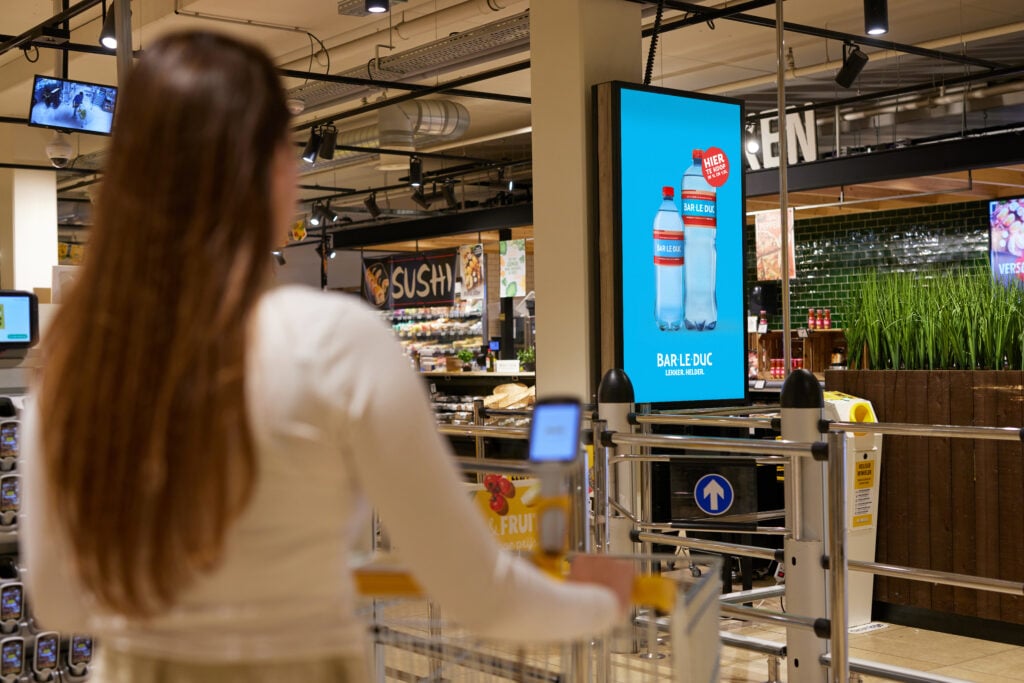
When displays are used for your own brand, the biggest pitfall is trying to say too much. Choose what truly matters. Nothing more. Communicate that with precision. Not fifteen messages in rotation, but three that drive behavior and strengthen the brand.
3. Let data lead
A content management system controls what happens on your display. Connect it to stock data, promotions, queue times or local preferences. That makes content dynamic. Is a product about to leave the assortment? Give it extra visibility. Are queues building up? Shift towards self-service. Your network adapts to the reality of the day.
4. Placement defines format
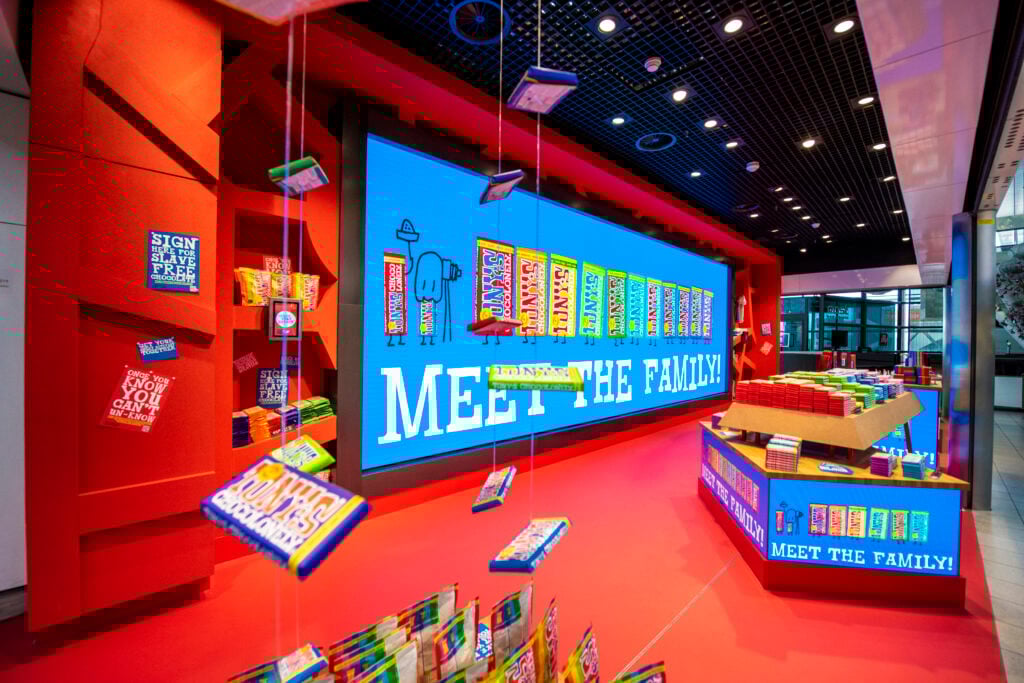
Every display type has a different role. A window display has one goal: to stop people. A three-second animation with one clear message outperforms an elaborate campaign video. In a product zone, content can take more time. Customers are already standing still and paying attention. That’s where there’s room for storytelling, functionality and inspiration. Placement defines format. Not the other way around.
5. Timing creates relevance
Morning audiences respond differently than evening shoppers. A busy Saturday requires different content than a quiet Monday afternoon. Smart content planning takes dayparts, weather data, seasons and campaign moments into account. Relevance isn’t coincidence. It’s planning.
6. Motion always wins
Digital signage is not a poster. Not a social ad. Not a TV commercial.
With TV and online, you choose to watch. With digital signage, you don’t. People pass by. You have seconds. Sometimes less. You either stand out, or you don’t exist. That requires different choices in the type of content you use.
Motion captures attention. Even in your peripheral vision. A subtle animation is often enough to make someone look, without them realizing it. 3D content builds on that. It adds depth and scale, making visuals land more powerfully on large displays.
Clean 2D motion does something else. It cuts through the noise. Ideal for high-traffic locations where a message needs to be understood at a glance.
The choice for 2D, 3D or a specific animation style doesn’t start with what’s already available. It follows the context of the display, the pace of the audience and what you want to communicate.
What it delivers
Retailers who combine digital signage with a strong content strategy see measurable results:
- Higher stop rate at entrances and window displays
- More impulse purchases and higher average spend
- Faster product discovery and improved navigation
- Shorter waiting times through smart content routing
- Stronger brand experience and higher brand preference
Operational success is the starting point, not the finish line
A well-functioning network is the foundation. Content is your stage. And the content strategy determines whether something happens or nothing at all. Technology shows what’s possible. But ultimately, content determines what works.